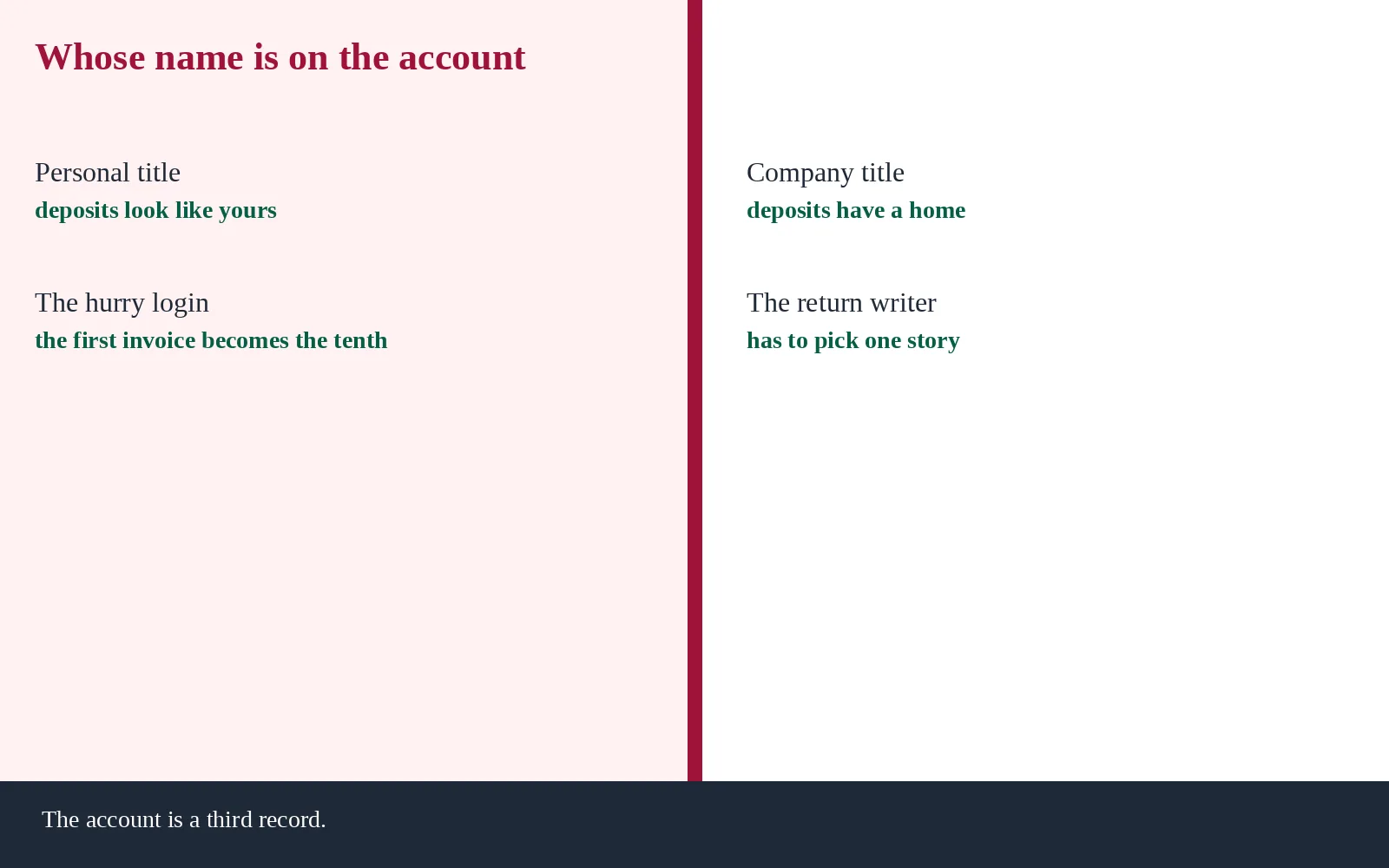
Banks title an account in a legal name. If that name is yours, the deposits look like yours. If the name is the company's, the deposits have a home that matches the certificate. The return writer, later, has to pick one of those stories.
Owners often open the account in a hurry, with a personal login they already trust, and promise to fix the title after the first invoice. The first invoice becomes the tenth. By then the year's deposits are in the wrong place and the cleanup is a reconstruction.
Bb
What a clean title looks like
The account name repeats the certificate. The signers are the people the company allows. Company receipts go in. Personal rent, groceries, and the household card stay out. Draws to an owner leave on purpose, labeled as draws, not as mystery transfers.
A second account for taxes set aside is useful once the activity is steady. It is not required to make the title true. One rightly named operating account, reconciled every month, beats three accounts nobody can explain.
Cc
When the title and the return fight
A single-owner company taxed on the individual return can still have a company account. The tax form and the bank title are allowed to look different, and they should. The company is disregarded for income tax and very much regarded by the bank.
The fight starts when the return says the company earned the money and the only statements are personal, or the reverse. A notice about an underreported deposit often begins in that gap. The letter is not random. The names did not match.
Dd
What we ask you to bring
Bring a statement page that shows the account title, and the certificate. If they disagree, the work is to open the right account and to decide what the old deposits were. A month is not dressed up with a name the bank statement does not show.
The monthly close then has a place to land. The bank feed, the categories, and the balance all refer to one named account. That is the record the return can stand on.