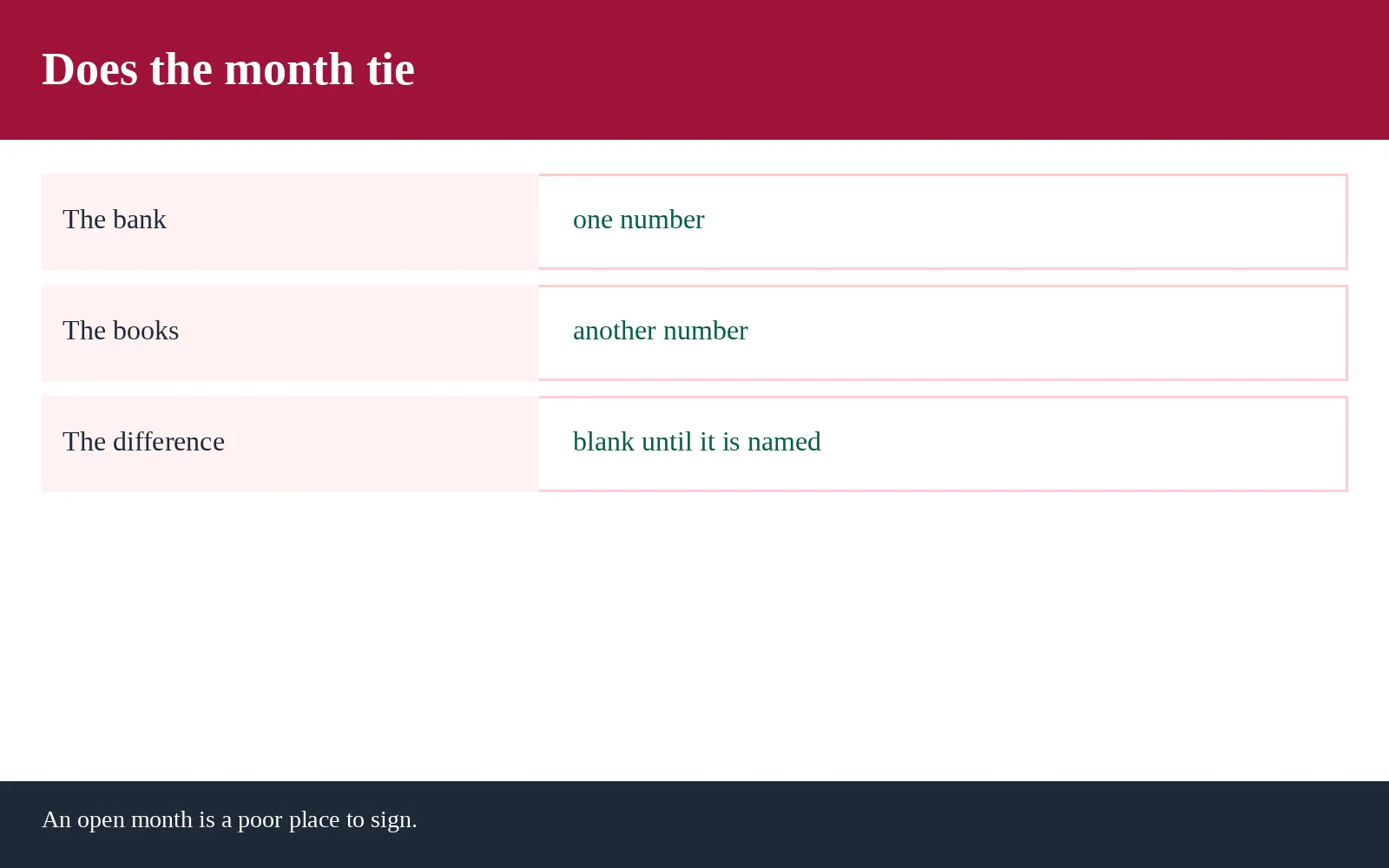
A month is closed when the cash matches the bank, the categories would make sense to you in a year, and nothing important is waiting on a question you have been avoiding. That is a plain test. It does not require a special dialect.
Until that test is met, the month is open. Open is an honest status. Pretending it is closed, so a report can be sent, is how the return later disagrees with the owner's memory.
Gap
What the close protects
The classification lives on a return you file once. The cash moves all year. Without a close, those two stories meet in March or April and argue. With a close, they meet every month, while a wrong account or a personal expense can still be moved.
Draws, wages, loan payments, and sales tax collected for a state that charges it each need their own place. A single expense account called miscellaneous is where a company goes to become unauditable by its own owner.
Order
The order inside the month
Reconcile the operating account first. Then the card, if the company has one in its own name. Then the questions, in a list short enough to finish. Then the statements. Profit, the balance sheet, and a note about anything that will matter at the return.
We do that with you, or we do the tie-out and you answer the short list. Either way the month has a date it was finished. That date is what makes October useful and April calmer.
In
Payroll sits inside the close, it is not the close
If wages exist, the provider's reports have to agree with the books. Setup is our job. Running payday is yours, on that provider. A month that closes without the payroll journal is a month that will surprise you at the employment returns.
If wages do not exist, the close does not invent them. A disregarded company with no employees still deserves a reconciled bank. It does not deserve a fake payroll to look sophisticated.