03
Three returns, three lives
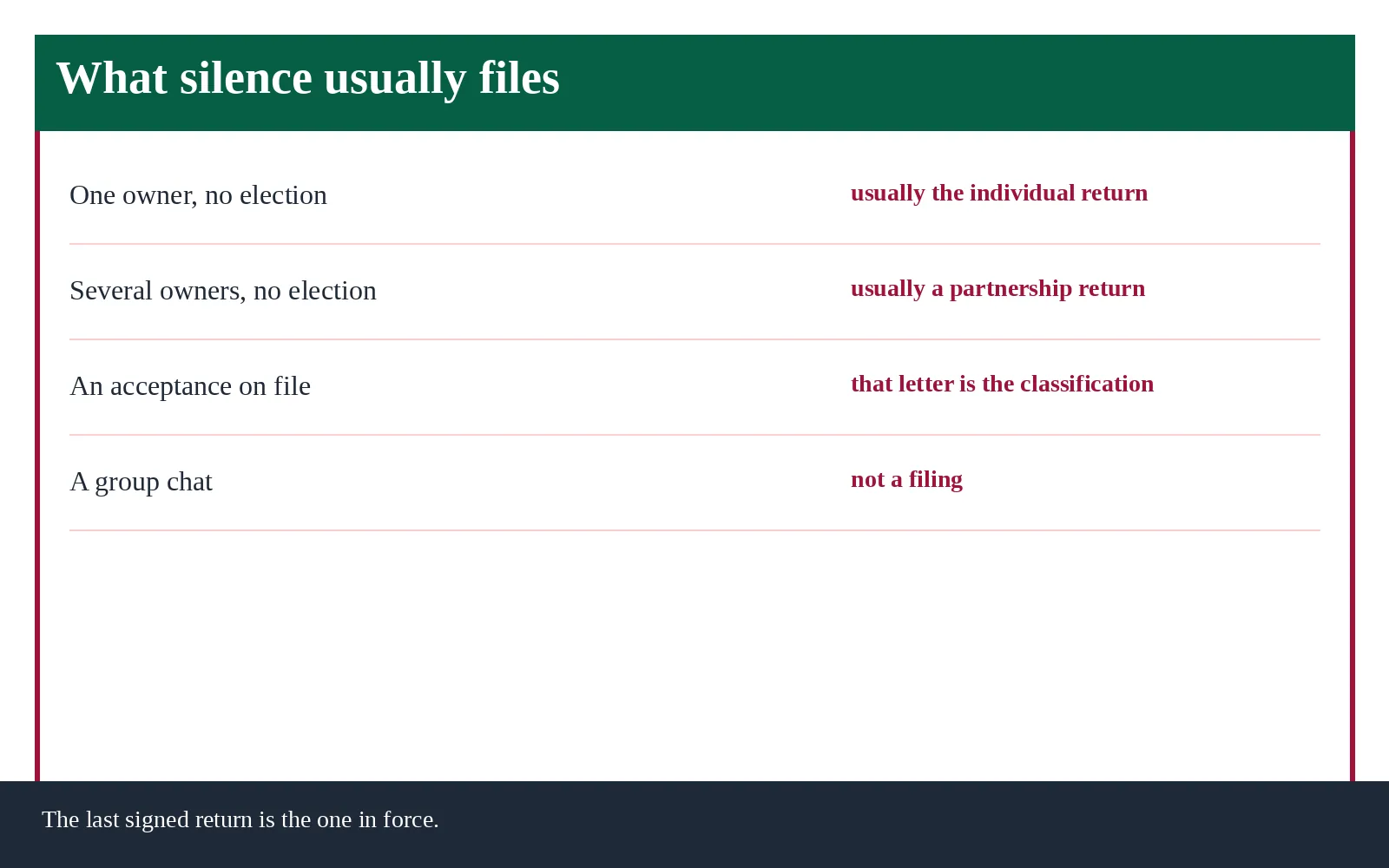
An activity with one owner and no election usually shows up on that owner's individual return, often on a schedule for the business. There is no separate company return. The owner signs once.
An activity with more than one owner and no election usually shows up on a partnership return. Each owner gets a slip. The company itself, in the ordinary case, does not pay the income tax. The owners do, through their own returns.
An accepted S election moves the activity onto an S corporation return. The owner who works in the company is generally paid wages, and those wages are a different form from the profit that passes through. A C corporation return is the other election, and it taxes the company itself. Most owners who say S mean the first of those two.
04
How to tell which one you are in
Look at the form number on the last thing you signed for this activity. Do not look at the dropdown a bank used, and do not look at the sentence a friend used at dinner. The form number is the life.
If you have never signed a return for the company, the default is still in force, and the first return is the moment it becomes visible. That first return should match the number of owners and any election that was actually accepted, not the one someone meant to mail.
05
Elections that were mailed and elections that were accepted
Mailing a form is not the same as having it accepted. Owners keep a copy of what they sent and never receive, or never file, the acceptance. A later return prepared as if the election worked will not match the government's file.
Write that the acceptance never arrived, if that is the truth. Leave the gap on the page. A blank line is more useful here than a recollection that feels sure. Late relief is a real procedure in some years and a closed door in others. The facts decide. A website cannot.
06
What the books have to match
Once the return type is known, the books have a target. Draws look different from wages. A partner's capital looks different from an owner's contribution on a disregarded company. Mixing those words is how next year's return starts already wrong.
We close the month to the return that is real. If the return that is real is not the return you wanted, the conversation is about next year, or about relief, and it happens before anyone reprints last year to match a wish.