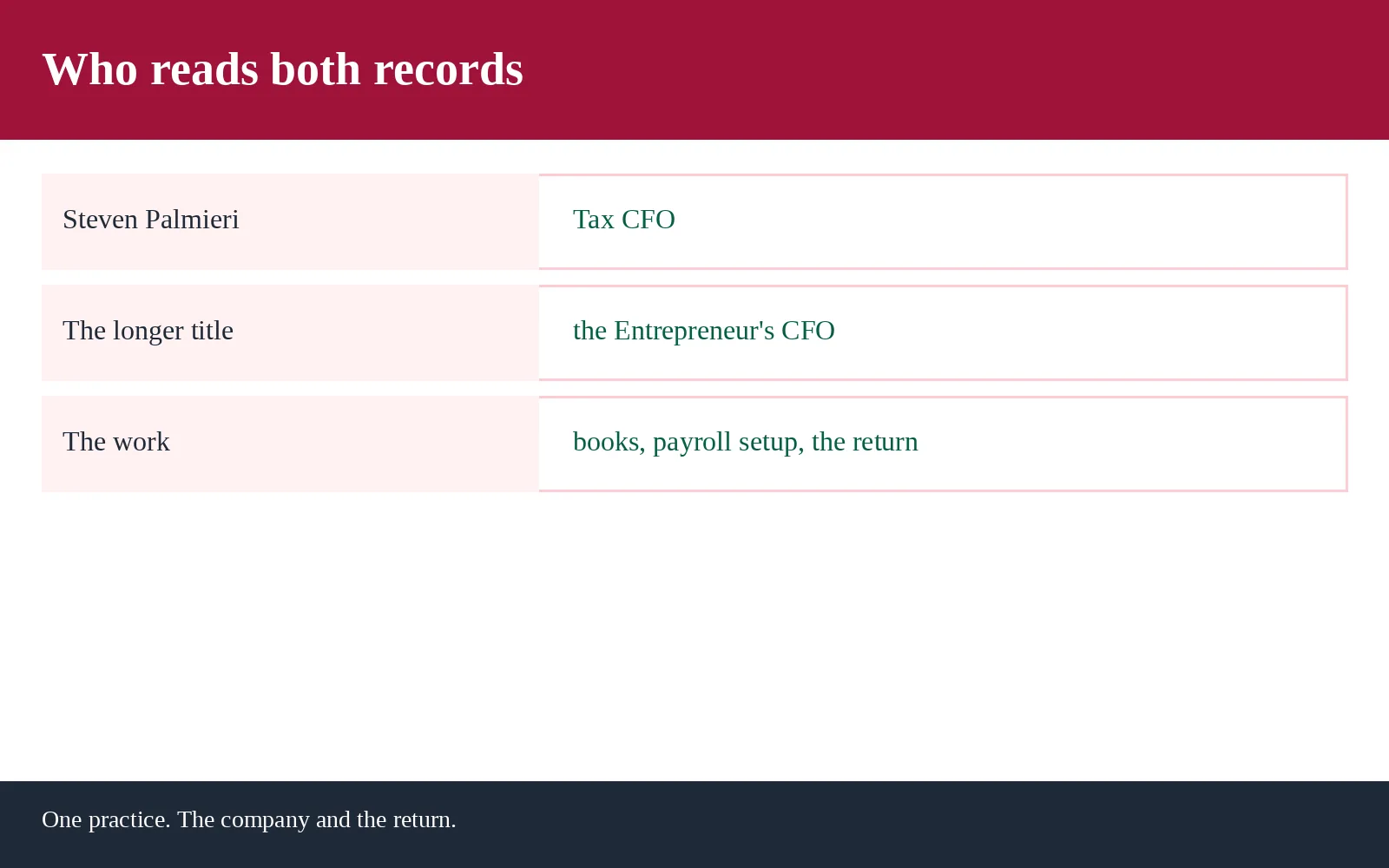
The books are kept to a month the bank agrees with. Payroll setup is done here, and the provider you already chose keeps running payday. Statements come from that closed month. The return is prepared from those months, in the classification that is actually on file.
The company a state created and the return that gets filed are read together, because leaving them to two different people is how they drift. One practice holds both.
No
What it refuses
A signed audit, review, or compilation is not offered. The limit is written on the disclosures page, and that is the only place it is drawn. When a bank asks for a signed report, the answer is the name of a firm allowed to sign one.
A saving is not quoted from a website. A wage is not invented to make an S corporation story sound tidy. A month is not marked closed while the bank still disagrees.
How
How an owner meets the work
You send the certificate, the last return, or a note that one of them is missing. A short reply says what appears to be on file. A video call is the conversation. A time gets chosen only after the booking page button is pressed, and until that press the frame on the page stays blank.
The footer carries the one number. A street is not printed here, and a mailbox is not printed here either. The form is the note. The call is the reply.
Why
Why the pages are split this way
Each page is one moment. The month you form. The name at the bank. The return that was filed. The first person you pay. October, while an extended individual return is due and the year can still move. The letter that says something failed to match.
You can read one page and stop. The pages are for the owner who wants the two records compared, and for the owner who wants the months kept after that comparison.